 |
||||||||||||||||||||||||||||||||||||||||||||||||||||||
MALE BREAST CANCER INSTITUTE Advancing the Science, Education and Global Understanding of Male Breast Cancer
A New Institutional Voice for an Overlooked Disease According to the American Cancer Society, approximately 2,670 American men will be diagnosed with invasive breast cancer in 2026, and an estimated 530 will die from the disease. The average lifetime risk is approximately one in 755 men. Although male breast cancer represents fewer than 1% of all breast cancer diagnoses, its relatively low incidence does not diminish the need for dedicated scientific investigation, timely diagnosis or equitable treatment. The Male Breast Cancer Institute (MBCI) was established in 2023 to address these needs through a multidisciplinary framework combining academic research, professional education, scientific publishing, global communications and public outreach. The Institute's founding philosophy recognizes that meaningful progress requires more than awareness campaigns. It demands a sustained infrastructure through which clinicians, researchers, survivors, educators, advocates and healthcare institutions can exchange knowledge, identify gaps in care and translate findings into practical resources. Our Mission: From Awareness to Scientific Advancement Its institutional objectives are to strengthen male representation in breast cancer research, promote earlier recognition of disease, support evidence-based clinical innovation, improve survivorship and quality of life, and ensure that educational resources reach populations historically underserved by conventional cancer communication. Equally important is the Institute's commitment to publishing and knowledge dissemination. Scientific findings must reach beyond academic conferences and professional journals to inform patients, families, community organizations and healthcare decision-makers.
Building Upon the Global Alliance's Achievements Ambrose began organizing male breast cancer awareness efforts in 2013, founded the Coalition in 2014 and introduced the Global Alliance in 2021. The Institute, established in 2023, builds upon this earlier work rather than replacing its organizational history. The Alliance's achievements form an important foundation for the Institute's research, education and outreach agenda. Through this complementary relationship, the Institute can help extend established advocacy successes into structured scientific and educational programs. A Record of Accomplishment and Global Impact 1. International survivor network: Developed a global community connecting more than 800 men affected by breast cancer, including survivors, advocates and families across multiple countries. 2. Research representation: Advanced advocacy for the inclusion of men in breast cancer clinical trials, helping challenge historical exclusion and strengthen attention to male-specific research needs. 3. Annual Medical Summit: Established an international educational forum bringing together oncologists, geneticists, researchers, rehabilitation specialists, survivors and advocates. The 2026 summit is scheduled for October 23–24.
4. Professional education: Developed webinars addressing reconstruction, genetics, rehabilitation, treatment innovation and survivorship, featuring recognized medical and scientific experts. 5. Scientific publishing: Expanded public education through UNCOVERED, a male breast cancer journal and communications platform designed to connect scientific knowledge with patient experience. 6. Global advocacy: Built international relationships among researchers, healthcare professionals and survivor representatives to advance awareness, equitable treatment and clinical research opportunities. 7. Patient representation: Cultivated survivor ambassadors who contribute personal experience 8. Research engagement: Supported initiatives encouraging survivor participation in scientific meetings, including the 2026 San Antonio Breast Cancer Symposium advocate scholarship program. 9. Public-health campaigns: Advanced educational outreach focused on early recognition, reducing stigma and improving awareness among underserved male populations. 10. Institutional development: Established an expanding framework for rehabilitation assessment, survivorship research, scientific communications and collaborative investigations.
SIGNATURE PROGRAMS AND INSTITUTIONAL INITIATIVES
RehabScan — Rehabilitation and Functional Recovery Survivorship and Quality-of-Life Initiative An outreach initiative designed to encourage men to recognize potential warning signs, report concerning breast or chest changes and seek appropriate medical evaluation. Special attention is directed toward communities experiencing barriers to awareness, diagnosis and healthcare access. The related BROTHERS, GET CHECKED campaign focuses on African American men, combining awareness, community engagement and proposed survey-based research into male breast cancer experiences. Annual Male Breast Cancer Medical Summit UNCOVERED — Publishing and Global Communications Research Funding and Collaborative Investigations Supporters, Collaborators and Scientific Partnerships Among the experts contributing to the Alliance's educational programming are Dr. Fergus Couch, Dr. Jay Harness, Dr. Pablo Leone, Dr. Neil Iyengar, Dr. Ben Park, Dr. Leslie Waltke and other distinguished clinicians and researchers. The Alliance also participates in the broader Metastatic Breast Cancer Alliance community, demonstrating the value of cross-organizational cooperation in cancer research and patient advocacy. The Institute welcomes additional relationships with academic medical centers, research institutions, philanthropic supporters, corporate sponsors and professional organizations committed to strengthening the scientific foundation of male breast cancer care.
The Next Chapter: Building an Institution of Lasting Impact
The Male Breast Cancer Institute represents a progression from public awareness toward enduring scientific and educational infrastructure. The founding vision of the MBC Institute is rooted in a fundamental principle: men with breast cancer deserve the same seriousness of investigation, quality of education, opportunities for research participation and standards of compassionate care afforded to every cancer population. As the Institute expands its research collaborations, publishing activities, rehabilitation initiatives and international outreach, its responsibility will be measured not simply by the number of people reached, but by the quality of knowledge produced, the relationships established and the improvements in care its work can help achieve. Male breast cancer may be statistically uncommon. The obligation to understand it, investigate it and support those affected is not. Editorial note: This institutional feature is drafted from the founding information supplied and publicly documented MBCGA achievements. The Institute's direct governance of Alliance programs, its formal supporters, and the operational status of developing initiatives should be confirmed before publication. Named medical experts are identified as Alliance educational contributors, not automatically as Institute advisers or endorsers. Institutional positioning: Advancing Research. Expanding Knowledge. Improving Lives.
Global MBC Data Registry & Research Intelligence Center
|
||||||||||||||||||||||||||||||||||||||||||||||||||||||


 |
The Male Breast Cancer Institute (MBCI) proposes the establishment of a dedicated Global Male Breast Cancer Data Registry & Research Intelligence Center, an international initiative designed to identify, collect, catalog, evaluate and disseminate existing epidemiological, clinical and scientific information concerning male breast cancer.
This initiative addresses one of the most significant challenges in male breast cancer research: the fragmentation of information across national cancer registries, academic publications, clinical trials, healthcare institutions and population-based studies.
Although male breast cancer is recognized internationally, comprehensive and comparable data remain difficult to access. Many national reporting systems aggregate breast cancer statistics without consistently highlighting male-specific findings. Others lack sufficient case numbers to support meaningful subgroup analysis, particularly concerning race, ethnicity, age, genetics, treatment outcomes and long-term survivorship.
The Institute's objective is to establish a centralized, academically credible resource that brings this information together, identifies where reliable evidence exists and documents where critical knowledge remains absent.
Mission of the Global Data Center: To develop and maintain a comprehensive international knowledge repository of male breast cancer incidence, mortality, prevalence, clinical outcomes, research findings and population-specific characteristics, supporting scientific investigation, public-health planning, professional education and global advocacy. The Center will function as both a historical archive and a continuously updated research resource, helping investigators and healthcare organizations better understand the worldwide burden of male breast cancer.
SEVEN CORE AREAS OF DATA COLLECTION
1. Global incidence and prevalence: Annual diagnoses, historical trends, age-standardized rates, lifetime risk and geographic distribution by country and region.
2. Mortality and survival: Annual deaths, mortality rates, five- and ten-year survival, stage-specific outcomes and longitudinal trends.
3. Demographic disparities: Differences associated with age, race, ethnicity, geography, socioeconomic status and access to healthcare, including underserved populations.
4. Genetic and biological characteristics: BRCA1, BRCA2 and other hereditary variants, tumor biology, hormone receptor status, molecular classifications and familial risk.
5. Diagnosis and treatment: Stage at diagnosis, diagnostic delays, surgical approaches, systemic therapies, radiation treatment and participation in clinical trials.
6. Survivorship and quality of life: Recurrence, rehabilitation, treatment complications, psychological well-being, physical functioning and long-term health outcomes.
7. Scientific research and clinical trials: Published investigations, systematic reviews, international research collaborations, trial enrollment, emerging therapies and documented evidence gaps.
INTERNATIONAL DATA SOURCES AND RESEARCH PARTNERSHIPS
The Institute will prioritize recognized scientific and public-health data systems rather than relying on unverified estimates.
Data source |
Primary value to the Institute |
International Agency for Research on Cancer (IARC) — GLOBOCAN |
International incidence and mortality estimates, including country-level comparisons |
World Health Organization (WHO) |
Mortality reporting, population health indicators and international cancer surveillance |
National Cancer Institute (NCI) — SEER |
U.S. incidence, survival, demographic and historical cancer statistics |
American Cancer Society |
Cancer projections, epidemiological reports and patient education |
International Association of Cancer Registries |
Connections to national and regional cancer registries |
International Male Breast Cancer Program |
Male-specific clinical, pathological and treatment research |
PubMed and ClinicalTrials.gov |
Published research, ongoing clinical studies and evidence reviews |
The IARC Global Cancer Observatory provides a useful foundation for this work, with international cancer estimates covering 185 countries. The Institute must, however, carefully distinguish male-specific data from statistics covering women or both sexes.
 |
The Global Male Breast Cancer Data Atlas
A principal deliverable will be an online, searchable research atlas that allows investigators, advocacy organizations and healthcare professionals to examine male breast cancer findings across countries, populations and time periods.
Proposed research database interface
Male Breast Cancer Surveillance
Worldwide
Incidence
Worldwide · Incidence
Research records will display source citations, reporting years, case definitions, population denominators and confidence intervals where available. Explore IARC Cancer Data This is a proposed interface, not a functioning Institute registry. Country-level data must be validated before publication.
Establishing a Scientific Standard for Data Integrity
Every record included in the Institute's repository should document its original source, publication year, country, study population, methodology, limitations and verification status.
Particular care will be required to distinguish:
- Confirmed diagnoses from estimated incidence.
- Annual deaths from cumulative mortality.
- Male-specific research findings from general breast cancer statistics.
- Population-based registry findings from individual hospital studies.
- Missing information from genuine zero-case reports.
For example, U.S. SEER-derived figures show five-year relative survival rates of approximately 97% for localized male breast cancer, 86% for regional disease and 31% for distant disease among men diagnosed during 2015–2021. These findings demonstrate the importance of documenting stage at diagnosis and maintaining consistent reporting periods.
An International Call for Data Contributions: The Institute will seek collaboration with cancer registries, university research departments, epidemiologists, hospitals, survivor organizations and international public-health agencies. Contributors will be invited to share published studies, aggregated statistics, historical records, research references and information about underrepresented populations. Any collection of individual patient information would require appropriate consent, privacy safeguards, ethics review where applicable and secure data-governance procedures. The Institute's initial goal should be to establish a secondary-data research repository, with any future patient-level registry developed as a separate, formally governed initiative.
Annual Publication
THE GLOBAL STATE OF MALE BREAST CANCER
An Annual Epidemiological and Research Intelligence Report
This flagship publication would examine worldwide incidence, mortality, geographic disparities, genetic findings, treatment developments, clinical trials and research gaps. It would also identify countries and populations where inadequate reporting limits scientific understanding.
By making this information accessible to researchers, clinicians, policymakers and advocates, the Male Breast Cancer Institute can become an important international resource for male breast cancer intelligence. The ultimate objective is not simply to count cases, but to ensure that every available piece of evidence contributes to better research, earlier recognition, more equitable care and improved survival. Its proposed formal designation would be:
MBCI Global Epidemiology, Data & Research Division
Its first major institutional undertaking should be a comprehensive historical assessment of male breast cancer cases and mortality across as many countries as available data permit, with particular attention to underreported populations and differences in national reporting systems.
 NYCRA NEWS is a free, all-volunteer public educational health news source produced by the NY Cancer Resource Alliance. Our contributors, publishers, (video) producers and editors unite to create and share current information related to health, wellness and the current state of our medical community at large. We collaborate with experts, researchers and health agencies to provide our readers with confirmed materials and resources to be shared throughout our network of partner foundations and cancer organizations.
 |
 |
 |
 |
 |
 |
Pennsylvania's HB433 Advances: A Landmark Bill for Breast Health Equity Unanimously Passes the House In a significant step toward improving breast health care equity in Pennsylvania, House Bill 433 (HB433) passed the Pennsylvania House of Representatives with a resounding 198-5 vote on May 12, 2025. This pivotal legislation, aimed at expanding insurance coverage for diagnostic breast examinations for MEN as well as WOMEN- without cost-sharing barriers, represents a victory for patients, advocates, and healthcare providers alike. A major touchdown for the Male Breast Cancer Global Alliance who originally reached out to the Pennsylvania Governor’s office and legislative stakeholders to advocate for improved access to breast imaging services — not just for women, but for all individuals, including men diagnosed with or at risk for breast cancer. (click to read complete feature) | PRESS RELEASE PDF |
||||||
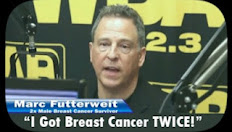 |
RECURRENCE IN REVIEW There is a constant debate in the cancer community about the term "CANCER FREE". Cancer recurrence continues to be a major concern as reported in annual medical reports- identifying its tendency to “return with a vengeance". Medical research has identified the major reasons why cancer recurs. A widely reported cause for this is attributed to a deficiency in treatment performance. [2] This means the therapy induced did not successfully remove or kill all of the cancer cells, possibly due to the patient's level of drug resistance. During treatment, Cancer cells can enter a dormant state to protect themselves from treatment and other stimuli. Over time, these dormant cells can reactivate. The cause of this may be a spike in chronic stress or the release of toxins from oxidative stress from environmental factors like smoking or repeat exposure to reactive chemicals. |
||||||
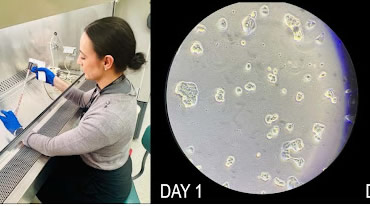 |
UPDATES ON DENSE BREAST RESEARCH- DR. NOELLE CUTTER |
||||||
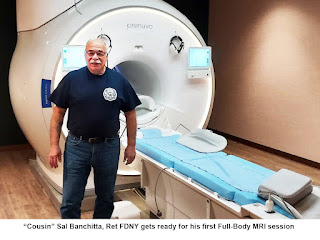 |
SALSCAN 2.0:
Cousin Sal Goes WHOLE-BODY MRI 8/8/2023- Ret. FDNY Sal Banchitta signs in to experience his Whole Body MRI from Prenuvo, NYC- a state of the art imaging company founded out of Vancouver, Canada. As one of the founding cancer awareness producers of NYCRA (NY Cancer Resource Alliance and F.A.C.E.S. (Firefighters Against Cancers & Exposures), Mr. Banchitta gladly accepted the invitation to receive this complete body scan as part of his pursuits of a base line for future scans and a preventative measure against cancer. "My mission alongside my fellow advocates is to learn about the latest modalities in diagnostics and treatment to bring awareness about cancer resources to the rescue community", says Sal. (See full article) also see: MEET PRENUVO |
||||||
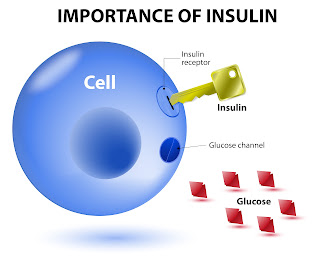 |
DR. DAVID MINKOFF AND INSULIN POTENTIATION THERAPY |
||||||
 |
The 10th Year Anniversary of "GET CHECKED NOW!" By: Drew Prestiani May 22, 2012, the Signorile Family Charitable Fund donated an undisclosed gift to the NY Cancer Resource Alliance to launch the educational and advocacy project to promote vigilance and proactivity in getting regular checkups. Aptly called "GET CHECKED NOW!", this program supported the outreach to cancer orgs, community groups and patient advocates to drive the message loud and clear about CANCER PREVENTION. "The Button" has become a symbol for many preventionists from fire safety speakers (like Dan Noonan, Ret FDNY) to Responder Resilience (podcast) to many oncologists and immunologists worldwide. The phrase emhasizes "NOW" because when it comes to cancer, time is of the greatest essence. And "GETTING CHECKED" states that there are many available options for diagnostics- from imaging to genetic testing to blood work.(press release TBA) |
||||||
 |
"TOXIC FIRES FROM BURNING PLASTICS" REMAIN A NATIONAL HEALTH THREAT - 45+ YEARS AFTER LANDMARK NYC FIRE 11/9/2021- The NY Fire Bell Club held its second annual meeting at the NYC Fire Museum on Spring Street- an historical landmark for "the city's bravest". FDNY's own Ret. FF Dan Noonan, responder/survivor and crusader for the 1975 NY Tel Exchange Fire. Since 1975, Dan Noonan has tirelessly promoted and echoed "the many lessons learned" from the department's most challenging disasters. He and many voices from the fire service considered the NY Tel Exchange Fire "our First 9/11" - clearly voicing an overwhelmingly different type of disaster as far as its after-effects and the many layers of damage both to the city and to the responders, communication workers and the residents in the immediate area. (See complete article in FRCR NEWS) |
||||||
 |
NEW COMMUNITY GROUP OF HEALERS OF PAIN AND INJURY - The directors of the NY Cancer Resource Alliance and the AngioFoundation launches the FHPMA (Functional Health & Pain Management Alliance). This professional collaborative group of pain and injury healers includes: clinical specialists, therapeutic technologists, diagnosticians and diagnostic innovators, public educators, advocates and other vital resources dedicated to supporting the medical art of physiological care. The FHPMA promotes the spirit of education, network-building and project partnerships, united through the bond of synergy and the common drive to make a difference. We contribute to the society of next-generation patient care through alliances, brainstorming and the integration of talents and solutions. We also support public awareness through educational projects, advocacy, joint research and sharing all useful information for public good. (www.PainHealersGroup.com |
||||||
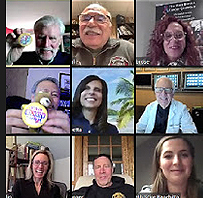 |
THE 2021 CANCER POWERMEET SERIES: OCCUPATIONAL HEALTH RISKS April 4, 2021 - The Integrative Cancer Resource Alliance launches the first virtual town-hall style video meeting called The 2021 Cancer PowerMeet series. This interactive event is part of a set of panel-driven meetings covering the topics of OCCUPATIONAL TOXIC EXPOSURES and SURVIVORSHIP AFTER THE JOB - with a list of prominent guests from the Medical and First Responders' communities. Headliners for this event include nationally recognized spokesman for fire safety and fire rescue veteran from the 1975 NY Tel Fire & 9/11 DAN NOONAN. Alongside Mr. Noonan is 35+ year cancer medical imaging professor DR. ROBERT BARD (NYC) + associate director of the First Responders Cancer Resource Group and active duty responder in 9/11 Sal Banchitta. Together, they all share their powerful experiences about notable disasters in history, answering targeted questions from a panel of top members in the cancer care community steering public awareness and education about prevention and early detection as part of I.C.R.A.'s "Get Checked Now!" program. (SEE ARTICLE & VIDEO - LINK) |
||||||
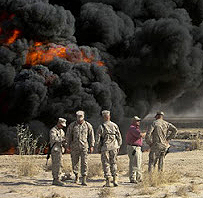 |
Source: First Responders Cancer Resource Newsletter JOB-RELATED TOXIC EXPOSURES (BURN PITS, FIRE EMERGENCY SERVICE) Feb. 27, 2021 - The effects of Burn Pits are being compared to other known military health cases like the wide exposure to Agent Orange from Viet Nam- as well as the many cancer cases caused by disasters like 9/11. - "...Unlike exposure to Agent Orange, VA does not consider any disabilities presumptively associated with exposure to burn pit smoke. Therefore, post-9/11 veterans filing claims for service connection must obtain a medical opinion stating that their condition is at least as likely as not a result of their exposure to burn pit smoke. VA adjudicates burn pit claims on a case-by-case basis in which the decision is based on the facts unique to each claim." (SEE ARTICLE LINK) |
||||||
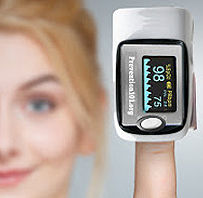 |
Source: Prevention101 THE PULSE OXIMETER: THE NEXT COVID TREND IN HOME HEALTH TESTING? Jan. 23, 2021 - According to a report from the Yalemedicine.org, "Pulse oximeters started to fly off store (and online) shelves when people learned that low oxygen saturation levels can be a sign of COVID-19. The logic is that shortness of breath, a symptom of the disease, may not be easy—or even possible—for a person to reasonably self-assess. What’s more, doctors report that some COVID-19 patients suddenly develop a condition called “silent hypoxia,” where people look and feel comfortable—and don’t notice any shortness of breath—but their oxygen levels are dangerously low. It happens to patients both in the hospital and at home, but it is a particular problem in the latter case because the symptom may indicate severe COVID-19-related pneumonia, requiring a ventilator. That’s why some people may want or need to monitor their oxygen saturation levels at home." (SEE ARTICLE LINK) |
||||||
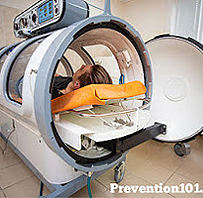 |
Source: HealthScanNYC DIAGNOSIS & TREATMENT OF INHALED TOXINS Mar. 4, 2021 - The symptoms of carbon monoxide poisoning are usually non-specific. In patients with unclear neurological symptoms and possible exposure, carbon monoxide should be urgently considered as a differential diagnosis. The treatment aims in particular to prevent long-term harms, such as cortical dysfunction, Parkinson‘s syndrome, Parkinson‘s disease, dementia, cardiac complications, as well as reduce mortality in the long term. All patients with symptomatic carbon monoxide poisoning should be treated with 100% oxygen as soon as possible. In severe cases of fire fume intoxication, combined poisoning with CO and cyanides should be considered. The evidence for the benefit advantage of hyperbaric oxygen is weak in view of the heterogeneity of the available studies. The decision in favor of HBOT seems sensible in severe CO intoxication or in pregnant women. (SEE ARTICLE LINK) |
||||||
 |
Source: Journal of Modern Healing THE KIRBY PROJECT: RESOLVING THE DEADLY PRICE TAG OF CANCER MEDS Nov. 28, 2020 - NYCRA News connected with Mr. Kirby Lewis, a 2x cancer victim and a survivor-crusader. He and a handful of community leaders are framing a grassroots outreach program to explore new solutions to making cancer drugs accessible and affordable. "I came from a family that did not believe in hording, excess or wasting anything useful. This is why it hurts to see my massive stockpile of unused cancer drugs from my episodes of treatment under the bathroom sink. When I think about so many people out there who truly need and cannot afford any of this, I am compelled to find a way to save those lives through the redistribution of these meds. I'd like to add that as a military vet, I am blessed with benefits to acquire my treatments and these drugs at no charge or a much reduced charge than most- where some of these doses cost in excess of $20-30,000 a shot.". (SEE ARTICLE LINK) |
||||||
|
|||||||
 |
||
CANCER SPEAKER SERIES ON EARLY DETECTION & PREVENTION: FIGHTING CANCER THROUGH PUBLIC EDUCATION (Top video: courtesy of Awarenessforacure.org and Male Breast Cancer Coalition. Bottom Video: Courtesy of Dr. Noelle Cutter) |